
How to Measure for Peel-and-Stick Wallpaper—Without Guessing
Wallpaper guides · Measuring & ordering
A wallpaper order starts with the wall, not the room’s floor area. Here’s how to record the dimensions, spot the details that affect the layout, and ask the right questions before buying.
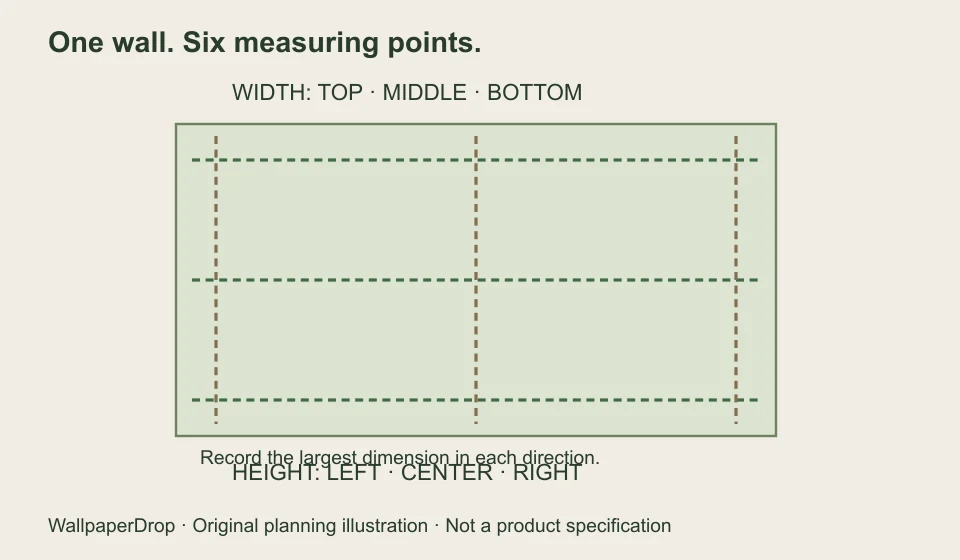
Measure one wall carefully before adding another.
Make a simple sketch and give the wall a name: “dining room—buffet wall,” for example. Mark the ceiling, baseboard and any trim so you can tell exactly where the wallpaper will start and end. If you are papering above a chair rail, measure the exposed band rather than automatically using the room’s full height.
Take three width readings and three height readings. Do not average them: a shorter average can leave the widest or tallest part uncovered. Record all six, then highlight the largest of each. Measure each wall separately; adjacent walls may have different heights or layouts.
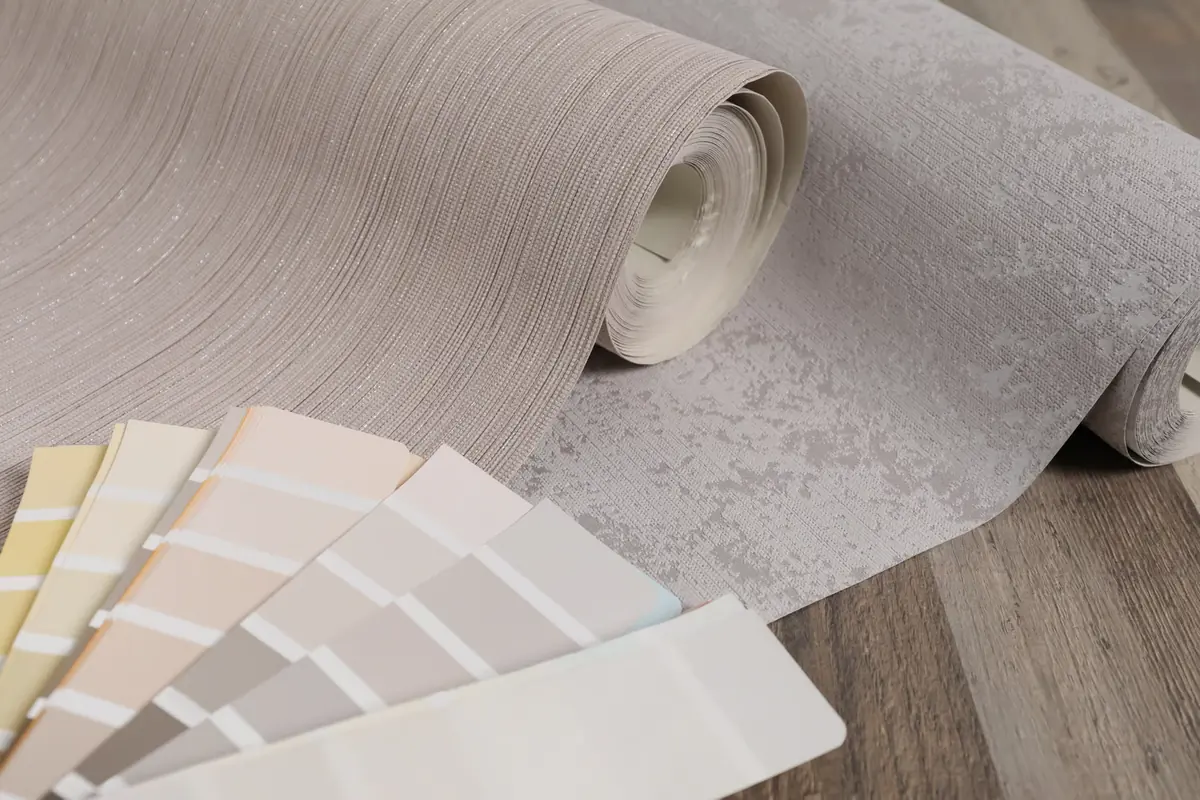
A worked example you can check
Suppose the width readings are 119¾, 120 and 119½ inches, and the height readings are 96, 96¼ and 95¾ inches. Your recorded rectangle is 120 × 96¼ inches. That is about 80.21 square feet. It is not “80.21 square feet of paper to order”: matching and trimming can change the quantity.
Use the wall planner to keep the units straight.
Enter the largest measurements from your sketch. The tool accepts feet and inches or centimetres and calculates wall area in square feet and square metres. It deliberately does not subtract openings, add an arbitrary waste percentage, or tell you how many rolls to buy.
Your wall-area planner
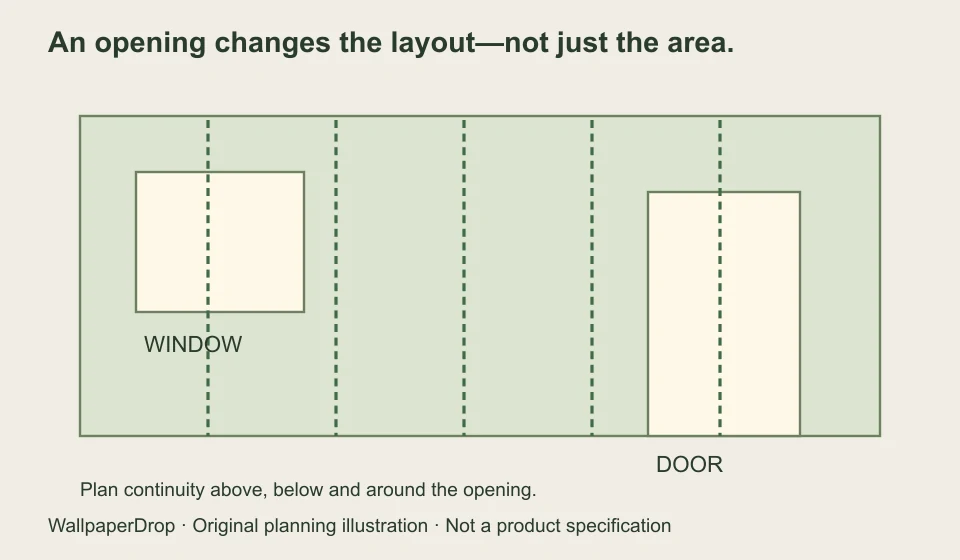
Draw the window or door. Don’t just subtract its area.
A window does not divide the wallpaper into unrelated little rectangles. Pattern often needs to continue above, below and around it. For a mural, the opening can remove an important part of the scene even when the remaining area is large.
Keep the full wall outline on your sketch. Add each opening’s width, height and position, plus the dimensions of the wall around it. Let the specific supplier’s layout and quantity method determine whether any material can be deducted. A generic area calculation cannot make that decision reliably.
Repeating wallpaper and a mural need different information.
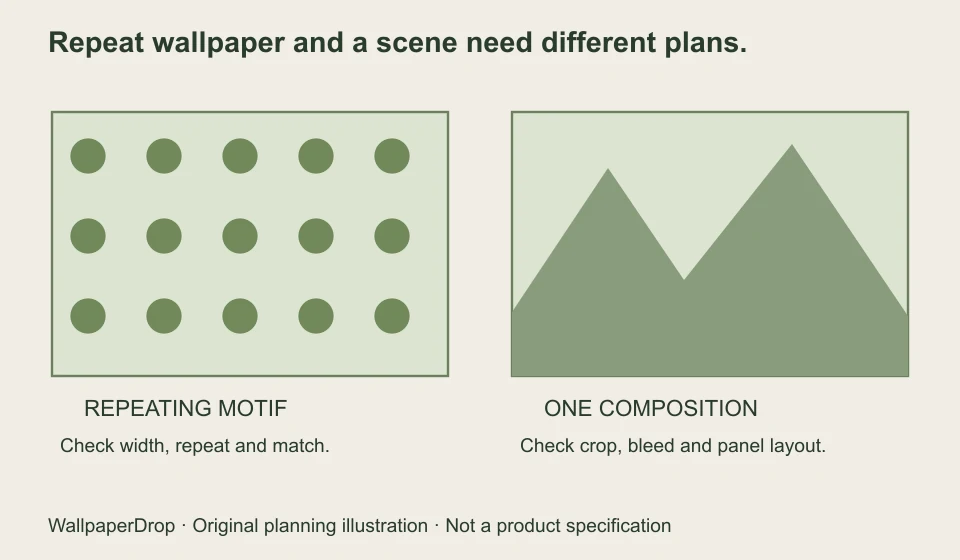
| Repeating wallpaper | Custom wall mural |
|---|---|
| What are the roll or panel width and usable length? | Which full wall dimensions does the supplier need? |
| What are the repeat length and pattern-match type? | Where will the scene be cropped and split into panels? |
| How much trimming and matching allowance is required? | Does the supplier add bleed, or must it be included? |
| How will the pattern continue around openings? | Will furniture or an opening hide the focal subject? |
For repeat wallpaper, two rolls covering the same nominal area can behave differently if their widths, lengths or matching requirements differ. For a mural, ordering more area does not automatically fix an unsuitable crop. Use the actual design and material specifications.
Leave with an ordering record—not a guess.
Before requesting a quantity or approving a proof, keep these together:
- The name of each wall and all six readings.
- The largest width and height for each wall, with units.
- A sketch showing doors, windows, trim and major furniture.
- The exact wallpaper design, material and ordering format.
- The supplier’s matching, trimming, bleed and quantity instructions.
A clear photo of the wall can help explain the sketch, but it cannot replace measurements. If the wall is sloped, irregular or part of a staircase, give the supplier a dimensioned drawing and ask how they want the shape recorded before ordering.
Plan your WallpaperDrop project
Use our measuring checklist alongside your wall sketch, then compare the wallpaper materials before ordering. Wall area alone does not establish panel or roll quantity.