
Vintage Bird Wallpaper in an Entryway: Plan Around Doors and Trim
Bird wallpaper ideas · Entryways
An entryway rarely gives you a clean rectangle of wall. Doors, coat hooks, a console and the turn into the next room all change how much of a bird pattern you actually see.
Start with the view you use when you come home.
Stand just inside the front door and take a straight-on photograph of the wall you are considering. Take a second picture from the room beside it. A wall that feels like a natural focal point when you enter may become a narrow strip when you see it from the living room.
Mark the door casing, baseboard, switches and anything that will stay in front of the paper. Include the console, mirror, coat rack and the coats themselves. You are choosing a pattern for that furnished view, not the empty wall in a product image.
On your photograph or a simple sketch, shade the areas covered by furniture. Then ask what the remaining pattern needs to do: give the entryway an overall leafy texture, show recognizable birds, or frame one open area. That answer is more useful than deciding that every small entryway needs a small print.
Compare a woodland scene with an ordered folk motif.
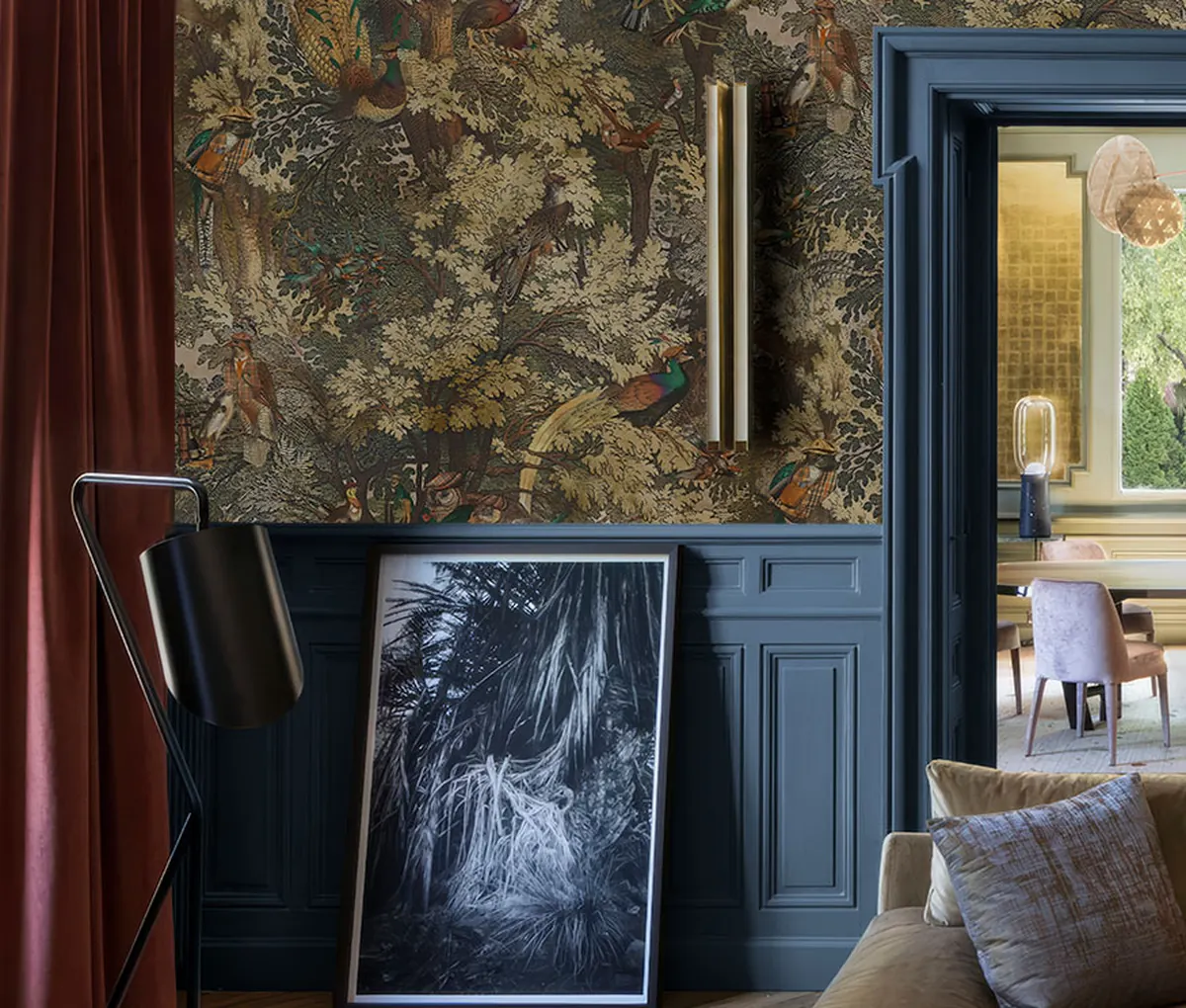
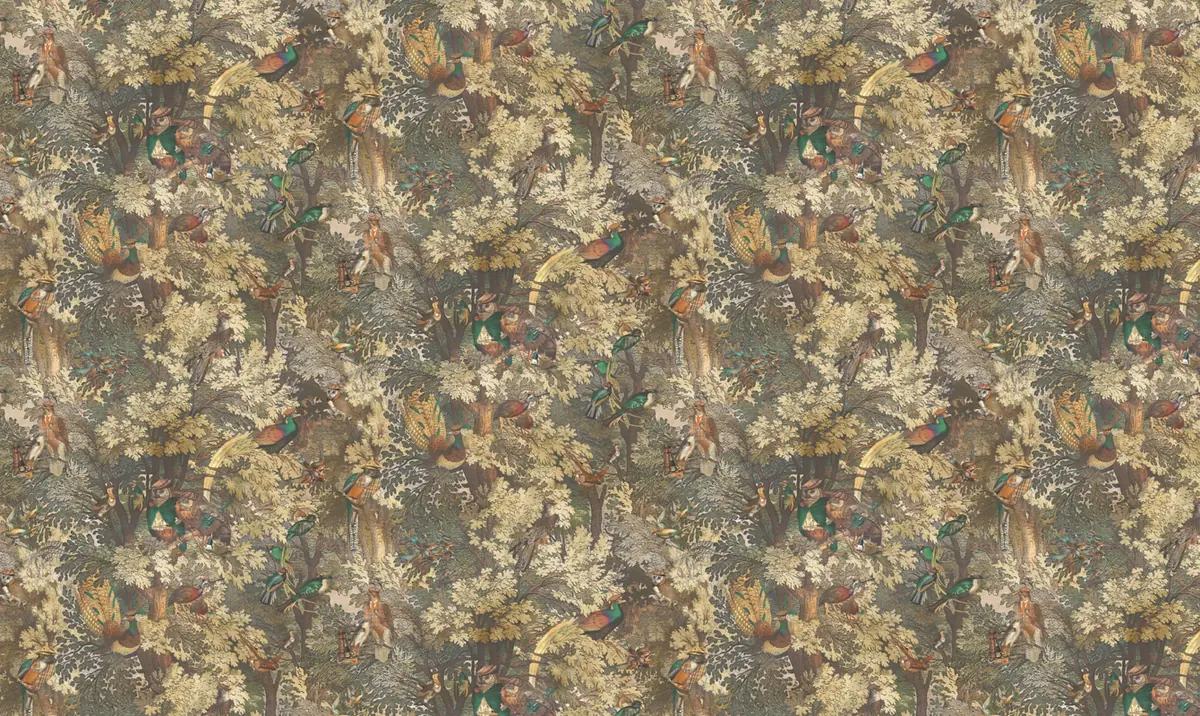
In Larkspur Gleam, birds sit among tree trunks, foliage and other woodland animals. The many small details create a layered scene. The practical question is whether you like the visible fragments around the door and above the console; there is no need for every bird to sit in the middle of an uninterrupted wall.
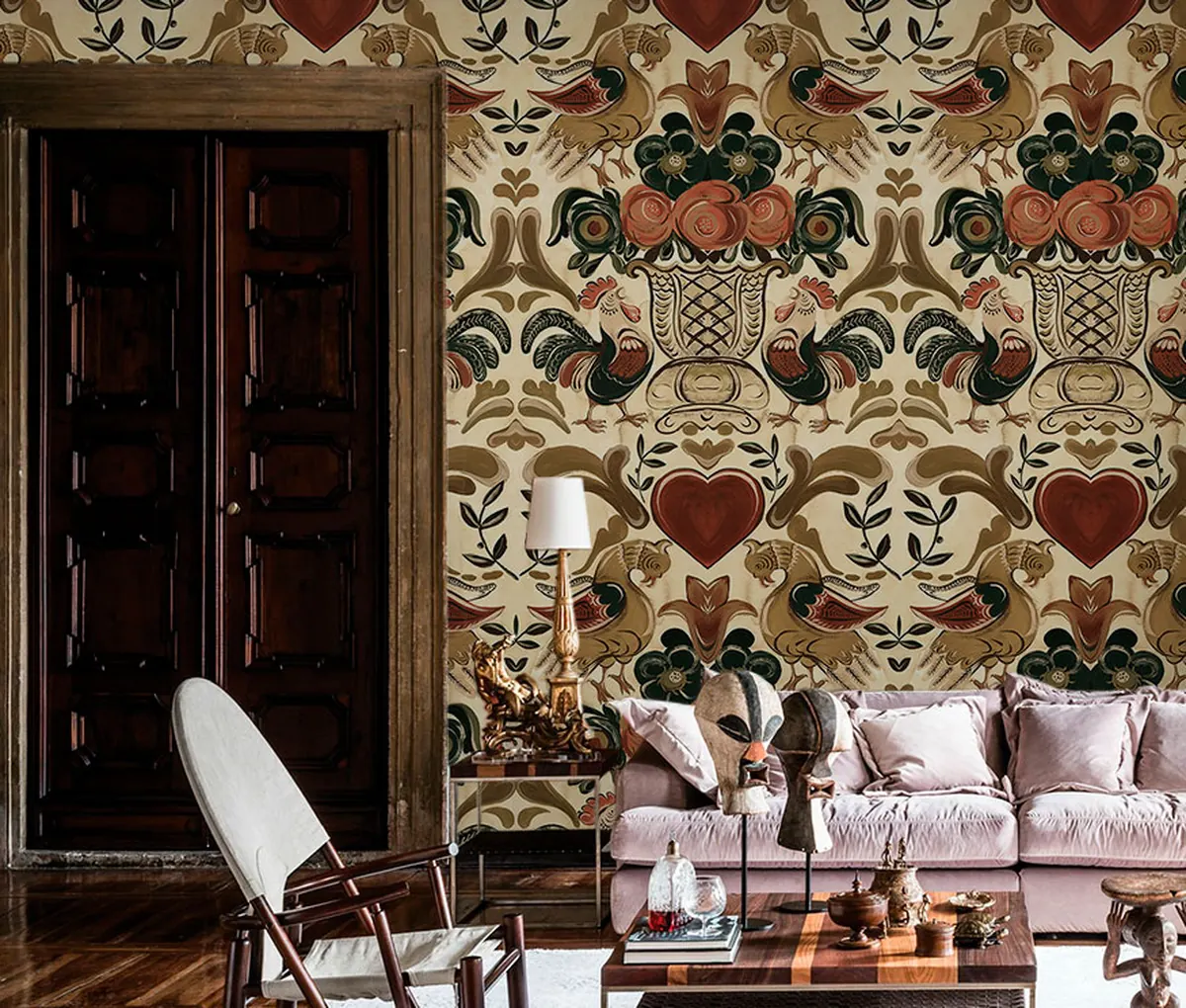
Junora Prelude takes a different approach: paired birds, floral urns, heart shapes and repeated ornamental elements. Its structure is more regular. Put that kind of arrangement beside your door frame in the comparison: do the cropped motifs at the edges still feel comfortable, and does a mirror interrupt the feature you wanted to see?
Here, “vintage-inspired” describes a visual direction. It is not a claim that either wallpaper is antique, a historic reproduction or a material from a particular period. Choose the artwork because it works with your room, rather than relying on an age label.
Let the door casing show you where the composition breaks.
A substantial door frame creates a strong vertical boundary. A busy bird-and-foliage scene can meet it naturally, but a bird cut closely through the head or a highly symmetrical motif split awkwardly at the casing may bother you. Circle those moments on your layout before making a decision.
If the existing trim is painted, include its real color in the sample check. Cream in the artwork may look different next to a crisp white casing than beside warm off-white woodwork. A digital mockup cannot settle that physical color comparison.
| What interrupts it? | What to compare |
|---|---|
| A door or opening | The fragments of birds and ornament beside the casing and above the opening. |
| A console and mirror | The band above the console and the artwork visible around the mirror. |
| Coats or wall hooks | The view with everyday items in place, not just an empty hook rail. |
| A corner into another room | Where the wallpaper ends and how it meets the adjoining paint. |
These are composition checks, not cutting instructions. A repeating wallpaper and a custom scene can have different layout constraints. Ask the supplier how the actual design is supplied and which positioning choices are available before expecting a particular bird to land in an exact place.
Check the sample at the times the entryway is used.
Hold the sample beside the floor, trim and console in daylight and again with the entryway lights on. Write down what changes: does the background seem warmer, do the small details remain readable, and does the trim still feel compatible? Keep observations specific. A photograph can remind you of the arrangement, but it is not a reliable substitute for looking at the physical sample.
Ask what the sample shows: is it the actual print scale, and is it large enough to understand the motif? A small excerpt of a large scene may not show how the design works around your opening. Confirm the repeat dimensions or request the appropriate layout information for the product you are considering.
Leave with an entryway planning record.
Use this checklist to find the information you still need. The answers stay on this page only; the print button saves a planning reference rather than sending an order.
Your entryway planning record
Checks recorded: none yet.
When you are ready to measure, record the wall dimensions and openings. Then check the wall surface before choosing the material. For a different furniture problem, compare birds-and-branches wallpaper behind a sofa.
Explore the bird designs
Compare Larkspur Gleam Bird Wallpaper with Junora Prelude Bird Wallpaper, or explore the Birds & Butterflies collection. Check the product gallery and available material before deciding how a pattern will work around your doors and trim.